Monday, 15 August 2016

Ghost hunting

Not far from where I live there's a small area of heavily shaded beech wood, that looks at first sight like there's not much there, but look closely and it is full of amazing surprises. I don't know who owns it or even what it's called, but it's a very special place. Bird's nest orchids, narrow-lipped helleborines and yellow bird's nests all grow there and in autumn some of the most wonderful fungi appear, including earthstars, coral fungus, deathcaps, horn of plenty, trumpet chanterelles and many more.
Doesn't look like much!
A few weeks ago I posted about the yellow bird's nests that were growing there and a couple of people commented that they are good indicators for ghost orchids.
There have been far more yellow bird's nests this year than last, with them
spread thinly across the entire site
Another indicator for ghost orchids is the presence of helleborines. Last year I counted 28 narrow-lipped helleborines in flower under the beech trees, but this year they've almost all been eaten. I think the slugs made the most of the very wet start to the summer!

Very sad to see these nationally scarce plants eaten!
I managed to find one very small plant that had survived, but it was much smaller than the plants I found last year and had almost gone over.
The only narrow-lipped helleborine that had survived
being nibbled (that I could find)
The holy grail of orchids, ghost orchids are listed as critically endangered and are one of our rarest wild flowers. They have only been recorded in two regions of the country, one of which was in the Chilterns near Marlow (which is about 15 miles away from us). They were last seen locally in the 1990's and can go for 20 - 30 years between flowering. They're tiny and grow in deep shade so are very easy to overlook, sometimes only flowering underneath the leaf litter.

I told Bug Mad Girl about ghost orchids and she got very excited and decided we could definitely find one (you can't fault her optimism!) It is extremely unlikely that a ghost orchid would actually flower in this wood, but you never know, so we couldn't resist going out a couple of time to search for them.
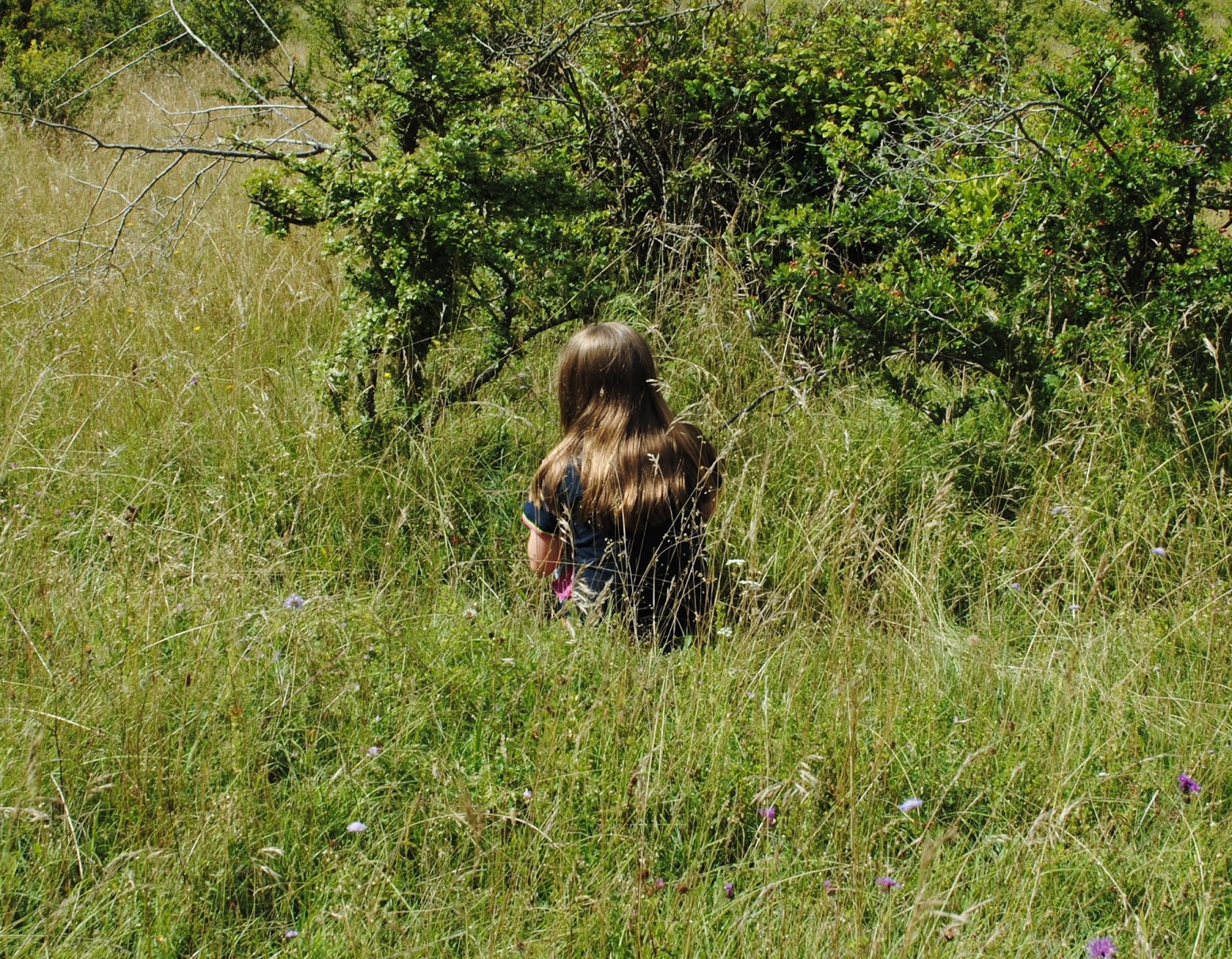
Bug Mad Girl hunting ghosts!
We looked and looked, but had no luck. Who knows though ... maybe next time ... and wouldn't that be something!

You can find out more about the organised search for ghost orchids and see some pictures of them at http://www.ghostorchidproject.co.uk/.

Saturday, 13 August 2016

Autumn

I have been lucky enough to have a piece of writing included in this wonderful book about Autumn.


Autumn is the third in a series of books by the Wildlife Trust, containing both old and new writing about each of the seasons. The blurb on the book says it contains extracts from classic texts, new work from established nature writers and pieces by Wildlife Trust supporters. I fall into the enthusiastic Wildlife Trust supporter category!  I also had a piece of writing included in Spring.

My contribution to the book was about the beautiful Chiltern gentian and devil's bit scabious that flower at Yoesden in the Autumn, as well as some of the wonderful wildlife that can be found there. One of my absolute favourite places!

Chiltern gentian

Devil's bit scabious
Crab spider

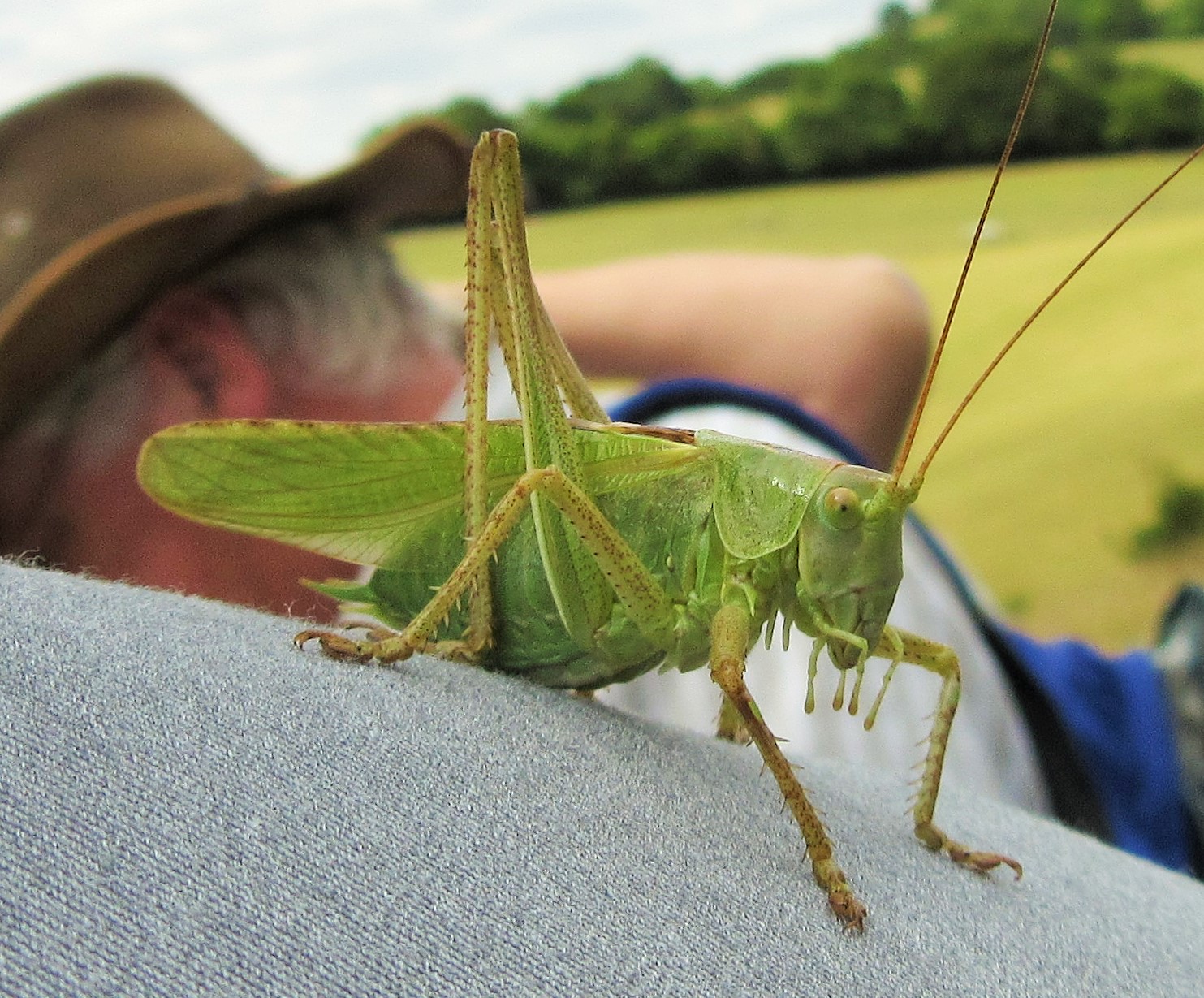
Great green bush cricket
The book will be available from the 25th August and you can find out more at http://eandtbooks.com/book/autumn-anthology-changing-seasons.

Friday, 12 August 2016

Violet helleborines

I took a walk around Brush Hill this morning to have a look at the violet helleborines that grow there. They're in full flower at the moment and seem to have done OK this year (although there seemed to be slightly less plants than last year). They grow in the deep shade of the beech trees, so are particularly difficult to photograph, but I did my best! They're a type of orchid and it's a real treat to have them growing just up the road from us.


We carried on through the woods and walked out onto the top of the chalk grassland slope. It's one of my favourite local views.

The grass looks dry and brown up there, but it's actually full of wonderful flowers, particularly scabious and knapweed.

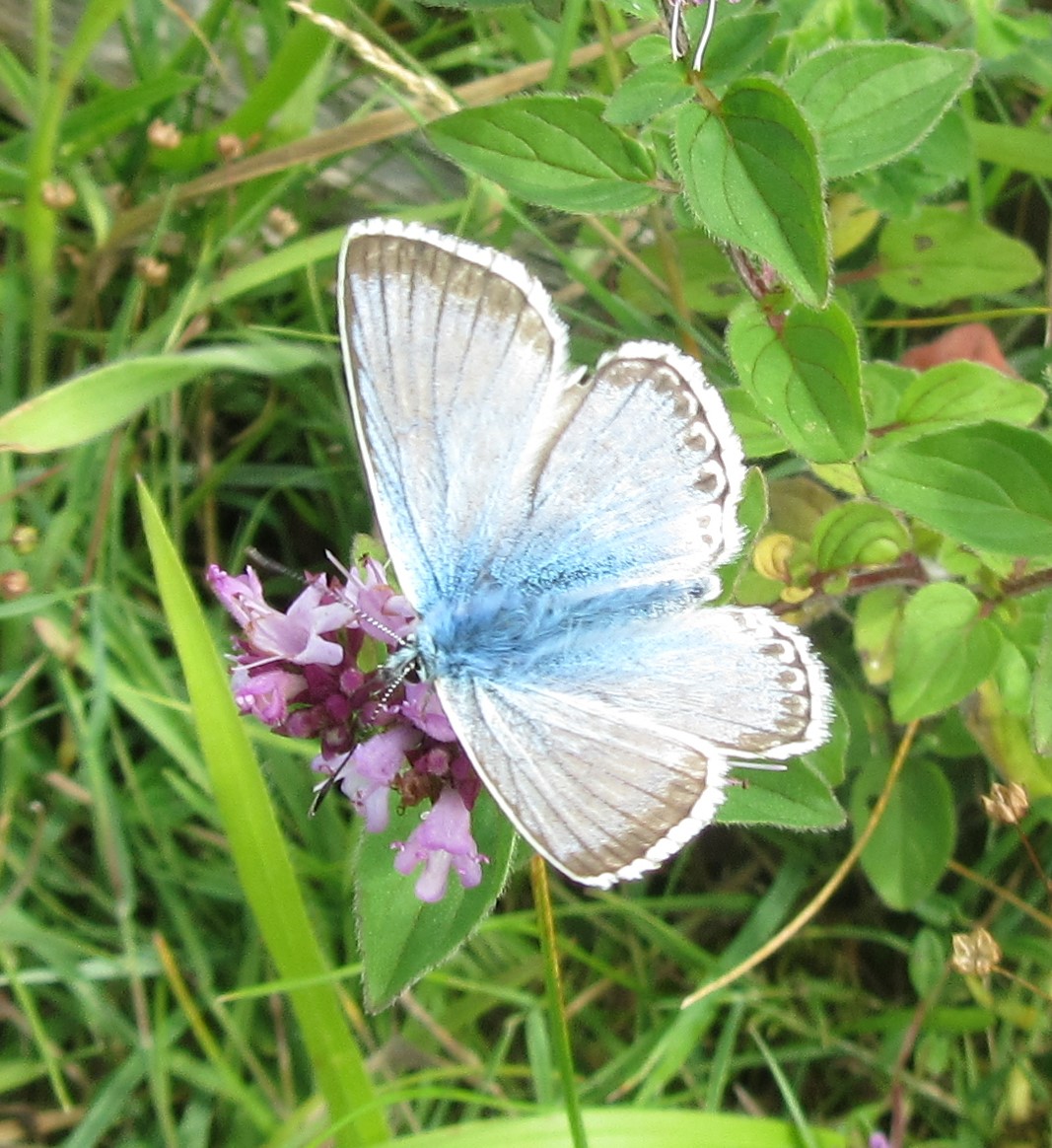
It was a bit windy, but there were a few butterflies flying, including holly blues, brimstones and a handful of common blues.

Brimstone

Holly blue
We walked back through the woods and across the road to Whiteleaf Hill, pausing for a minute to enjoy the views again and look down on the top of the huge chalk cross that's carved into the hillside.


Walking back to the car park there must have been at least a dozen speckled woods in the dappled shade of the trees. I love the way they guard their little patch of territory, chasing off any intruders, always returning to rest within a few feet of their original perch. When you walk down the path you can see where you pass from one butterflies territory to the next.
Speckled wood
Back at the car park I spotted a small tortoiseshell, then had a walk around to see if there were any more violet helleborines. I found one, right next to where the cars park. It's funny how often you find the good stuff in the car park!
The car park violet helleborine 

Tuesday, 9 August 2016

Bug Mad Yoesden

Crickets and grasshoppers are a bit of a Bug Mad Girl favourite and she can't resist trying to find them when we're out. She's never happier than when she's creeping through the long grass, listening out for their whirrs and chirps, trying to spot one before it boings off into the distance.


The ultimate prize for her is to find a great green bush cricket. A prehistoric looking monster up to 7cm long, it's our largest native bush-cricket. It has a very loud song, sounding like a sewing machine, but is still quite hard to find. On a visit to Yoesden last summer one crawled up somebodies leg and sat on their shoulder, making a very memorable encounter which has only fuelled her desire to find another one.
A great green bush-cricket from last summer.
We visited Yoesden today and tried hard to find one, but had to satisfy ourselves with lots of little grasshoppers. I suspect we may be back to hunt again before the end of the summer.


There were hundreds of common and chalkhill blues flying on the slope. Most of the chalkhill blues were looking a bit tatty, but the common blues look freshly emerged. In fact I've hardly seen any common blues since earlier in the year so it was great to see so many of them today. I didn't see any Adonis blues, but they should soon be around again.
Male chalkhill blue

Female chalkhill blue

Common blue

Common blue

Common blue
There were lots of other butterflies flying including meadow browns, gatekeepers, small skippers and we saw one marbled white (possibly our last of the year) and one small copper (our first of the year). There were also several day flying moths, including 6-spot burnet moths, a silver Y and a dusky sallow.
6-spot burnet moths making new 6-spot burnet moths

Dusky sallow

Silver Y
We also saw a horse fly that had caught a common blue. It flew off when we disturbed it, carrying the common blue with it, which was quite a site.

There's a patch of dark mullein that flowers at the bottom of the slope, so I had a quick look and found more than 20 striped lychnis moth caterpillars feeding on it. We saw them there last year as well, so it's good to see this scarce moth is still doing well.


You can always rely on Yoesden for some beautiful views and a bug mad morning!

Saturday, 6 August 2016

Brunch on a branch

Tea up a tree was one of our favourite #30DaysWild activities, so the kids were keen to do it again. It was a beautiful day yesterday, and their cousin from Ireland has been staying with us, so we packed up a picnic and set off for our Robin Hood tree.

There really is something extra special about climbing up into a tree with your picnic and eating it up in the branches. I left the kids to it yesterday and didn't climb the tree this time!

They had a wonderful time up in the tree.


We all enjoyed the stunning views of the Vale of Aylesbury...

 ... and chased a few butterflies around.

Ringlet
 Then made our way home again.


When we got home, the sun had brought the butterflies out of hiding and two peacocks and a red admiral spent the afternoon on the buddleia bush. It finally felt like summer!

Peacock

Red Admiral

Thursday, 4 August 2016

Thistles, galls and chalkhill blues

There were stormy skies over Grangelands this morning as I walked round. It was very windy on the Rifle Range side and the sun was in and out, so very few butterflies were flying, just a single small tortoiseshell and a couple of large whites. The great thing abut this reserve though is that you can walk around the base of Pulpit Hill, into Grangelands, and be much more sheltered from the wind.
 

It never ceases to amaze me how much can change in just a few days. The marbled whites, that seemed to be on every flower head a couple of weeks ago, had disappeared. Many of the flowers that were just starting to appear, such as the scabious and marjoram, were in full flower, making a beautiful display and aroma.

Scabious bobbing above the grass
The delicate, paper thin harebells and pretty purple stars of autumn gentian had both started to flower...
Harebell - looks almost like it has been cut out of paper
Autumn gentian
 ... but it was the thistles that had really burst into life since my last visit, popping up throughout the short turf. The purple dwarf thistles and beige carline thistles were all covered in bees and butterflies.

This bee was loving the dwarf thistles

Carline thistles
 This creeping thistle had gone to seed. I can't resist exploding thistle down!
Creeping thistle
There appeared to be some unusual 'gooseberry' shaped growths on its stem, which I've since found out were made by the larvae of the thistle gall fly, which burrow into the stem and cause this swelling or gall.
Not a gooseberry!

I was quite taken with the wonderful teasels.

Teasels, towering over the other wild flowers
I saw one red admiral and plenty of gatekeepers, meadow browns and large whites. I also saw what I'm pretty sure was a silver spotted skipper, although it didn't stay around long enough to get a photo and disappeared in a hurry.

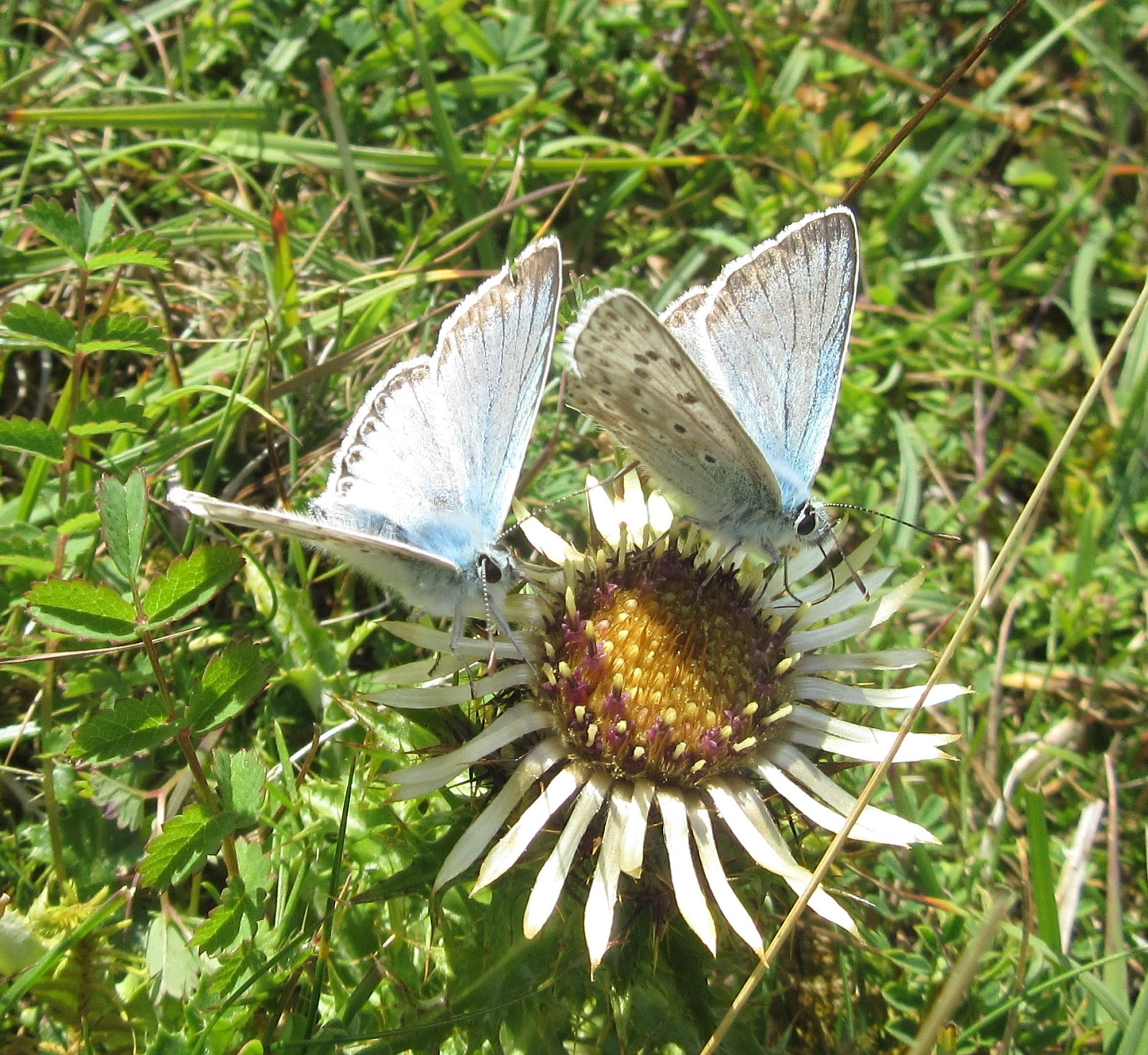
Out of the wind, the chalkhill blues were out in large numbers, especially on their favourite slope. What you can't see from the photo is a flickering blue haze as the male butterflies flutter low to the ground. There must have been 30+ on this small slope alone. They were really enjoying the carline thistle flowers and it was good to see a few female butterflies around as well.
The chalkhill blues favourite slope


Female chalkhill blue
 I checked the small patch of dark mullein that grows there, but couldn't find any striped lychnis caterpillars on it.
Dark mullein
I also spotted a robin's pincushion gall, which is made by the larvae of a tiny gall wasp. It develops on the stems of wild roses, turning redder through the autumn. The larvae will feed on the plant throughout the winter and emerge as adults next spring.


Robin's pincushion
Another lovely walk around Grangelands and we made it round before the rain started!