Saturday, 6 June 2015

#30DaysWild day 6: Blooming Brilliant Ragpits

It's two weeks since we were last at Aston Clinton Ragpits and at that point only the Twayblades were fully flowering. The Greater Butterfly, Chalk Fragrant and Common Spotted Orchids were all nearly there, but not quite open as you can see here.

We were back today (minus Bug Mad Girl this time, who's at Brownie camp all weekend) on a guided walk led by the warden. We were looking forward to seeing which orchids were flowering now and what treasures we'd missed that the warden could point out to us.


The site used to be a chalk quarry, so it's full of steep slopes and deep hollows and is a warm, sheltered sun trap. From the road you would never know it was there, but as soon as you walk through a few trees it opens out into the most amazing chalk grassland site, that's completely covered in orchids and other wild flowers. Apparently 50 species of wild flowers have been recorded in a single square metre there!

It never ceases to amaze me how much can change in just a couple of weeks. Where two weeks ago we'd been excited to see a handful of Chalk Fragrant Orchids just showing a bit of colour, they were now everywhere you looked.


There were plenty more flowers still to open, which should keep everybody very busy at the annual orchid count that's due to take place next weekend. The warden thinks they'll be at their peak in about two weeks time, so we'll definitely be back for another look.
 
We found Greater Butterfly Orchids throughout the site. Again, when we'd previously been there we'd been excited to find what we hoped were a few Butterfly Orchids, but now there were lots of them. I think they are my favourite orchid (at the moment) as they're so tall and elegant. They really are beautiful.


The Common Spotted Orchids are flowering now and the Twayblades are putting on a wonderful display. It's such a shame they're green flowers so disappear into the background. If they were any other colour everybody would love them and think they were stunning!

Common Spotted Orchid
common Spotted Orchid


Common Twayblades

Common Twayblades


Common Twayblade flowers
The warden showed us some White Helleborines hiding in the shade of a Hazel coppice that we hadn't spotted before. He also pointed out where to look for Bee Orchids and Broad Leaved Helleborines later in the summer.

White Helleborines
White Helleborines


The Ragpits are a wonderful site for butterflies and we saw Common Blues, Brimstones and Dingy Skippers today. There would have been more flying, but it was quite windy and the sun was in and out all morning.
 
Common Blues

Dingy Skipper
We also found a Slow-worm under one of the sheets of corrugated iron. There are also Grass snakes on the site, but we didn't find any today. There were no Adders, but we did find some Adders-tongue Ferns instead!
Slow-worm

No Adders, but there were Adder's-tongue Ferns
It's such an amazing site and we'll go back in a coupe of weeks to see the Chalk Fragrant Orchids at their very best.

Friday, 5 June 2015

#30DaysWild Day 5: Feeding the Red Kites

We're lucky enough to live close to the initial release site of the project to reintroduce Red Kites to the Chilterns. It's been such a great success that these days it would be more unusual not to see a Red Kite when you look out of the window, than to see one. Many people feed them (which is part of the reason they've done so well), including my parents. Every now and then we sit in their garden and enjoy the spectacle of these fantastic birds taking food from the lawn, a few metres away from us.


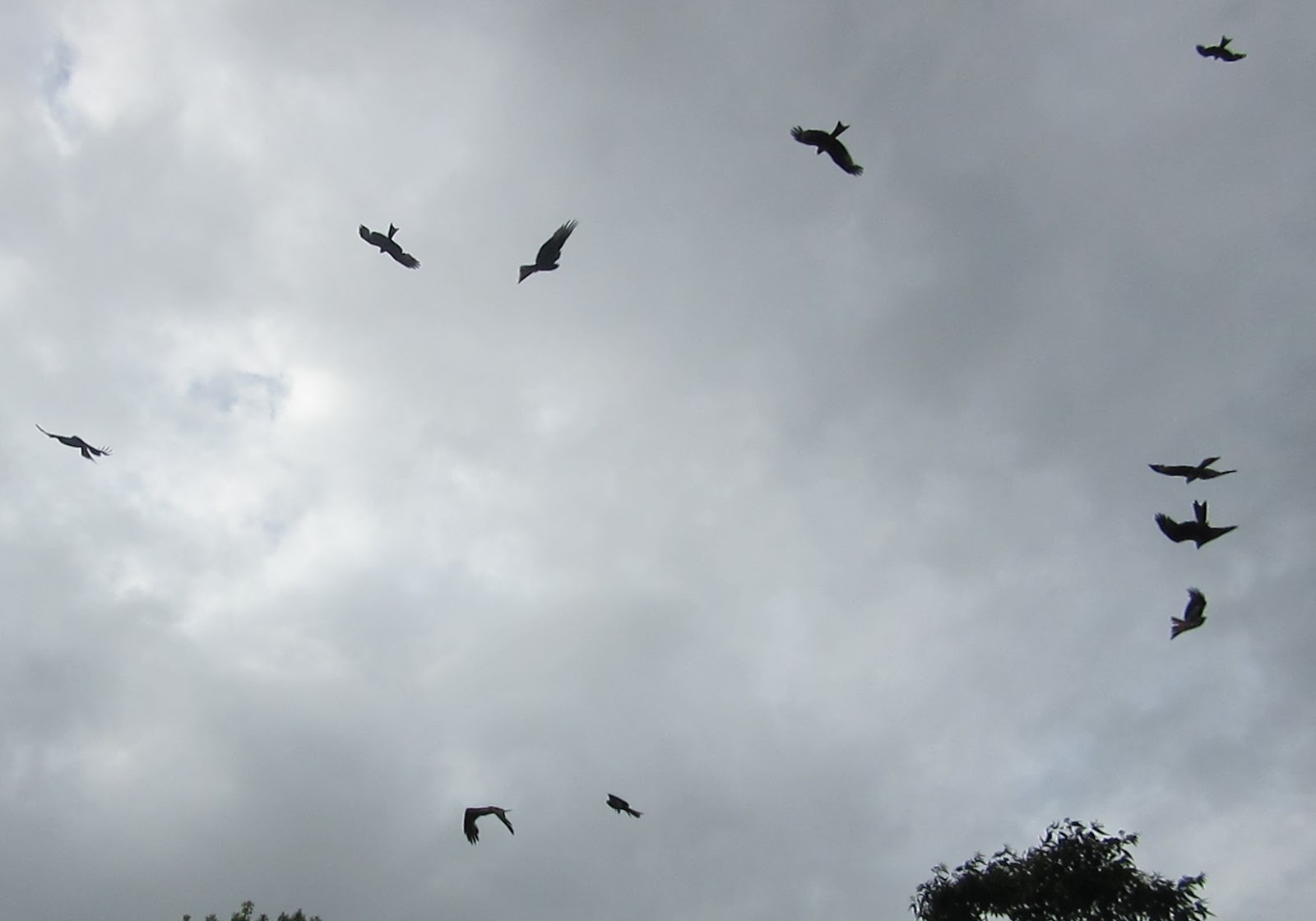
As soon as they spot some food they start to circle, attracting more birds until there could be 20 or more Red Kites overhead.


You can feel the tension build as they circle lower and lower.


Then suddenly one will make a move and dive, triggering them all to go, swooping down from all angles. For big birds they are incredibly agile and can maneuver between tall trees, snatch the food from the lawn, then they're off again, dodging the garden hedge and the trees on the other side of the garden.  It's all over in a second and they're incredibly quiet when they dive, with you often only hearing a whoosh and feeling the breeze as they shoot past your head. When one manages to get some food, the others often chase after it and try to snatch it away from them in mid-air.

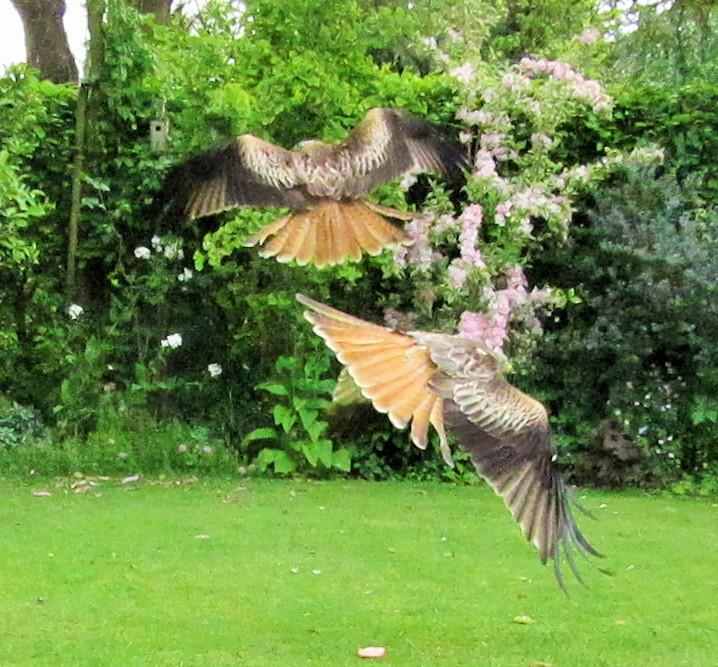
Up close you can see the amazing range of colours in their plumage. There's a patch across the top of their wings that looks just like leopard skin!


They quite often have to avoid each other, as shown by this sequence of shots. They do occasionally clash, but usually manage to miss each other and always seem to get out of it unscathed.


A wonderful experience to see such beautiful birds right in front of you! The kids love it, although you have to hang onto the youngest one to make sure he doesn't join in!


Thursday, 4 June 2015

#30DaysWild Day 4: Pond Dipping

Inspired by a guide to pond dipping with a GoPro by Wildlife Gadget Man's we decided to have a go at pond dipping and some underwater filming. I'd never even thought about sticking a GoPro in the pond, so it was quite exciting to see if we could see anything.

Our pond in the garden isn't very big and is covered by a metal grid (to stop children and pets from falling in!) so its quite tricky to get to. We wanted to try out some underwater filming, so stuck the GoPro in to see if we could see anything. There are two fish in there so we managed to spy on what they get up to, but didn't see very much else.


Now we knew it worked, we wanted to do some pond dipping and try out the GoPro in the wild. We gathered together a net and white dish, picked the kids up from school and headed up the hill to Brush Hill, where there are two ponds in the middle of the woods.

On the way to the ponds
One of the ponds was dug last winter, so is fairly new and is definitely man made. The other is older and I don't think is man made. Unfortunately when we got there, the water was almost all gone from the older pond. It was much too muddy and shallow to pond dip or film.


The new pond had plenty of water in it, so we stuck the GoPro in and left it to film while we had a go at pond dipping.
#30DaysWild Day 4
There were pond skaters on the top of the water and with the net we caught red worm-like creatures that I think are midge larvae, water shrimps, water slaters, beetle larvae and leeches.


We took the camera home and had a look. It was quite murky, but we could definitely see 'things' in the water and several of the red midge larvae made an appearance.


 Lots of fun and very interesting to see what's in the murky water!

Wednesday, 3 June 2015

#30DaysWild Day 3: Back to see the White Helleborines

The sun was actually shining today so I decided to go and have another look at the White Helleborines that Bug Mad Girl found last week. They're growing on chalk, on a steep slope in the shade of beech trees. Nothing else is growing near them and they really look out of place there. They seem very happy there though!


Some of the flowers had opened up to show their yellow colouring, but most remained closed, which is typical of White Helleborines.


Then I emerged from the shade of the beech trees and paused to take in the amazing view.


It felt like the grassland had burst into life since our last visit. Yellow vetch covered the slopes and everywhere was buzzing with literally hundreds of Garden Chafer beetles with their metallic green heads and shiny bronze wing cases.


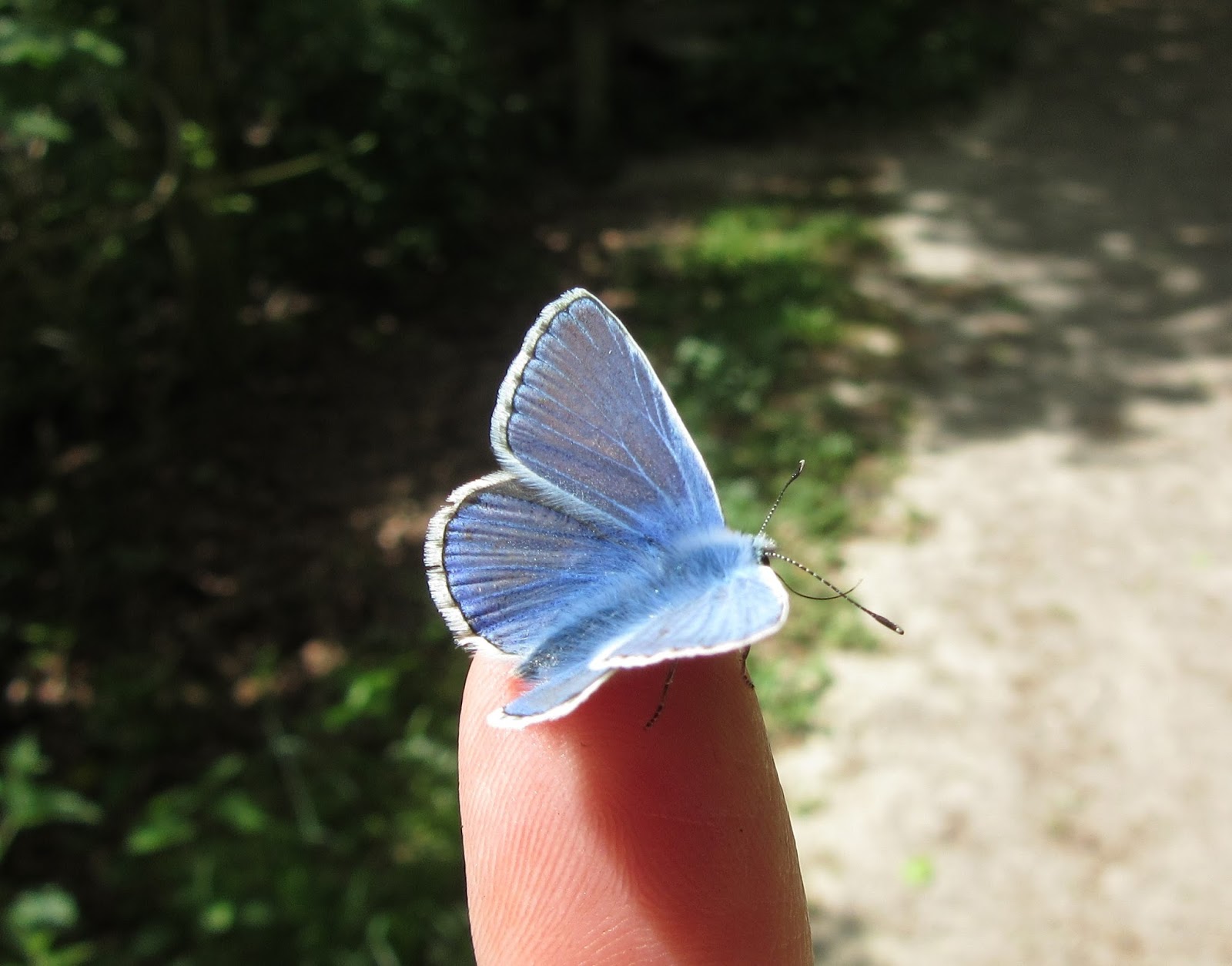
I saw several Common Blues, one of which sat on my finger for a few minutes and made friends with me.
#30DaysWild day 3


I also saw a Dingy Skipper - shame about the name, as it's not that dingy!
Last week we found three Common Spotted Orchids in flower in one part of the site, but today there were lots more flowering in many different parts of the site. The Twayblades seemed to have appeared as well. It's amazing how the orchids all seem to pop up over night. You can look for them one day and find very little trace, then you go back a couple of days later and they're all there.

Common Spotted Orchid

Common Spotted Orchid
 
Twayblade
I found a tiny 14 spot ladybird hiding in a Twayblade and a Grasshopper in the grass. Both were very well camouflaged!

14 spot ladybird in a twayblade

Grasshopper
Then I walked back through the woods and watched a bunny for a few minutes on the path ahead of me.  It eventually realized I was there and shot off into the bushes.

Monday, 1 June 2015

#30DaysWild Day 1: Pyrtle Spring in June

The start of #30DaysWild coincided with the last day of half term, so the kids were home and were keen to visit Pyrtle Spring. We've been going there each month to see how things change throughout the year and to keep an eye out for a very special rose!

Pyrtle Spring is a special place where my great-great-grandparents used to meet before they were married. They took a cutting of a wild rose from the spring and planted it in their garden. Cuttings have been passed down through the family since then and 138 years later one made its way to my garden, where it is soon to flower. Read the full story here.
Pyrtle Spring (or the Culverton Rose)
The walk to the spring is along a footpath edged with Cow parsley, with the Chilterns in the distance and Culverton (where my great-great-grandparents lived) on the other side of the field.


The spring is hidden away behind a wall of leaves, so it's like walking through a magical doorway to get inside.
The entrance to Pyrtle Spring
It's always exciting to find how much water will be in the spring and today .... it was completely dry.


Although you can always rely on the kids to find some mud!


The kids love the spring. They can walk around the banks, then explore down in the bottom, climbing on fallen trees and looking under logs and on nettles for bugs.

From the bottom of the spring, the banks seem a long way up 

The logs have to be checked - there were ground beetles, millipedes, beetle
larvae, slugs, slug eggs, worms and spiders

Climbing on the fallen trees
There were a few nice creatures on the nettles growing in the bottom of the spring.

14 Spot Ladybird

Crane Fly

Downlooker Snipe Fly

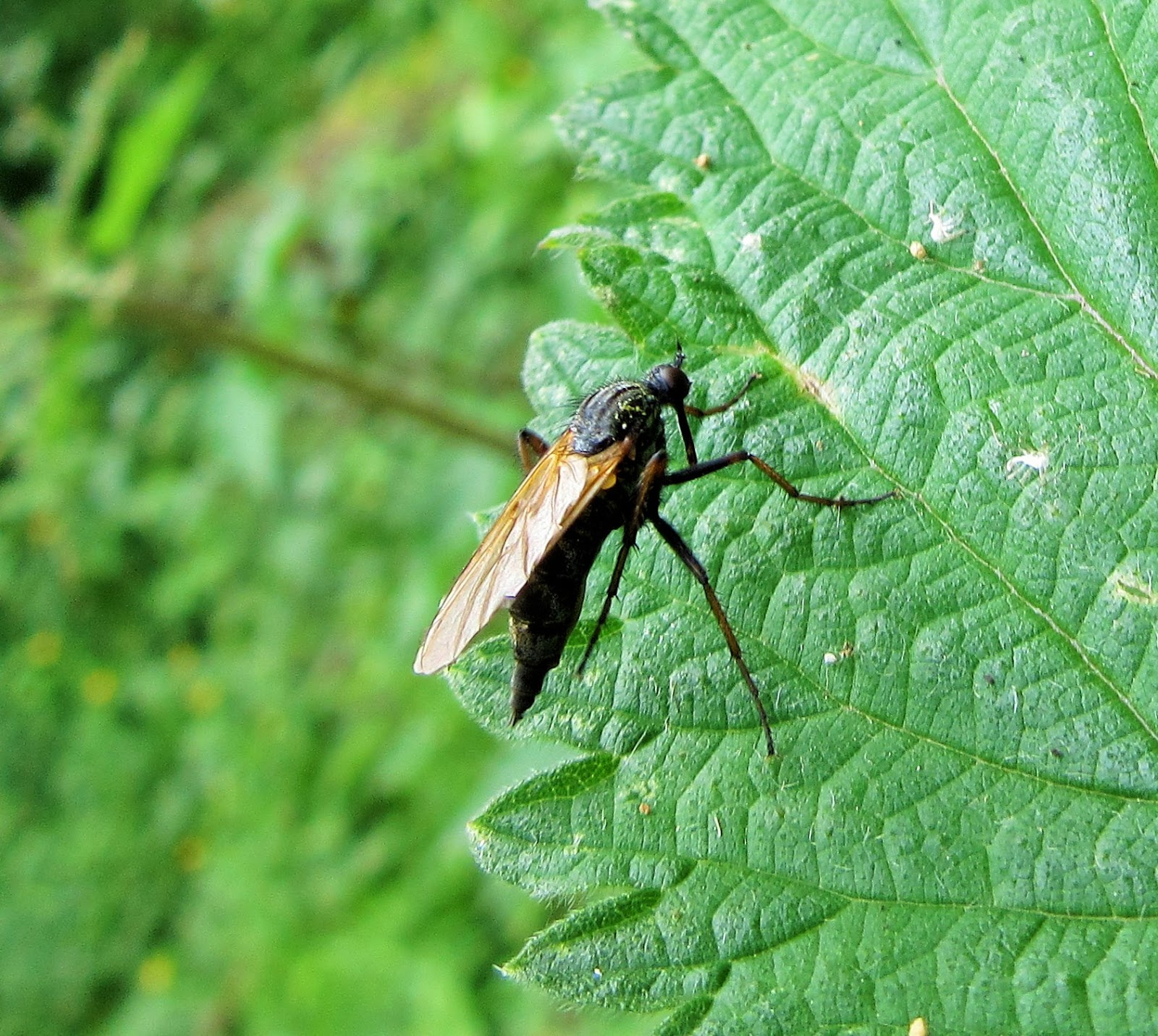
Dagger Fly (maybe)

We found a couple of rose bushes, but they didn't have any buds on, so we'll just have to wait until they flower to see if they're the same as my rose at home.

The birds were twittering around in the tree tops and we heard a woodpecker tapping away in one of the nearby trees. Then as we were leaving the swallows were swooping around us, chasing after insects (rubbish photos I'm afraid - they were a bit fast for me!) and the red kites were gliding over the fields.

You can see the insects around the swallow

Red Kite