Monday, 4 May 2015

Pyrtle Spring in May

We went back to Pyrtle Spring this morning to see what had changed since our visit a month ago. You can read the story of Pyrtle Spring and it's special place in my families history here.

The spring was sitting in a sea of yellow rape seed. Not everybody's favourite crop for all sorts of reasons, but it was certainly a splash of colour!
 
Pyrtle Spring, floating in a sea of yellow

The trees were covered in leaves and the wildflowers were growing high, making it feel much more alive than previous visits. The spring was hidden away behind a green curtain and we had to get up really close to see whether there was any water in it.

We walked through and were surprised to see the spring was dry. A month ago there was water covering the base of the spring and two months ago the water was running through the spring and down a stream towards Culverton.
The water was gone from the spring
There was still plenty of mud in the bottom of the spring though!


It felt like we were surrounded by special trees, beautiful for all sorts of reasons. Some were tall and majestic, others had branches that were twisted and knotted, some had bark covered in stunning patterns and others were covered in pretty flowers or seeds.

Down in the bottom of the spring, the huge Horse Chestnut trees on the bank towered over us. They're such old trees, with gnarled, ridged trunks and massive roots growing down the bank. They were very impressive, hanging precariously onto the edge of the bank.


The massive candelabra flowers on the Horse
Chestnuts were staring to bloom
Some of the trees have bark covered in whorls and grooves, forming beautiful patterns.


An Elm tree was covered in seeds in their papery cases, looking like huge pale green flowers.
 

The wild flowers had really grown throughout the spring and we found a rose (could it be the Culverton Rose?) and the Cow Parsley had started to flower.

Could this be the Culverton Rose?
Cow parsley
We'd spotted some bluebell leaves growing last time we were at the spring. Turns out they're Spanish Bluebells and not our native flowers, so must have come from a garden. We also found a small patch of Grape Hyacinths, which only grow wild at a few sites in East Anglia, so again these must have come from a garden.
Spanish Bluebells are paler blue than our native bluebells and
have flowers all around an upright stem, instead of on one side
of a bent over stem
Grape Hyacinths - these shouldn't have been there either!
All sorts of little beasties were hiding under the logs in the bottom of the spring. We found lots of slugs, worms, centipedes, beetles and woodlice.


Around the outside of the spring the nettles and cow parsley were buzzing with ladybirds, spiders, bees and flies.
7-spot ladybird

Harlequin ladybird


Hoverfly

Bee with a furry white face
Along the edge of the field, the air was thick with large black flies with long dangly legs. They're called St Mark's flies (or Hawthorn flies) and they fly in May, only living for about a week. The males have large eyes and fly around at head height, while the females are bigger and have much smaller eyes and legs.
Male St Mark's fly with it's long dangly legs

Waiting patiently for the ladies!

Sunday, 3 May 2015

Sunday snails

After several heavy thunderstorms this afternoon, the sun came out, so we decided to take an early evening trip to Pulpit Hill and Grangelands. It's another of our favourite places, with stunning views and lovely Roman snails.


The Roman snails were mooching around in the woods and out on the open grassland. No sign of any of them paired up, but they were very active after all the rain.


We saw lots of slugs, both the big black ones and the yellow slugs. They seemed to be feasting on the dog poo that inconsiderate dog owners had left in the woods. Never say slugs don't have an important role to play - they're woodland pooper scoopers!

Cleaning up the dog poo

Yellow slug
We saw a variety of other snails including Door snails and Brown-lipped snails.

Tiny Door snail
Brown-lipped snail


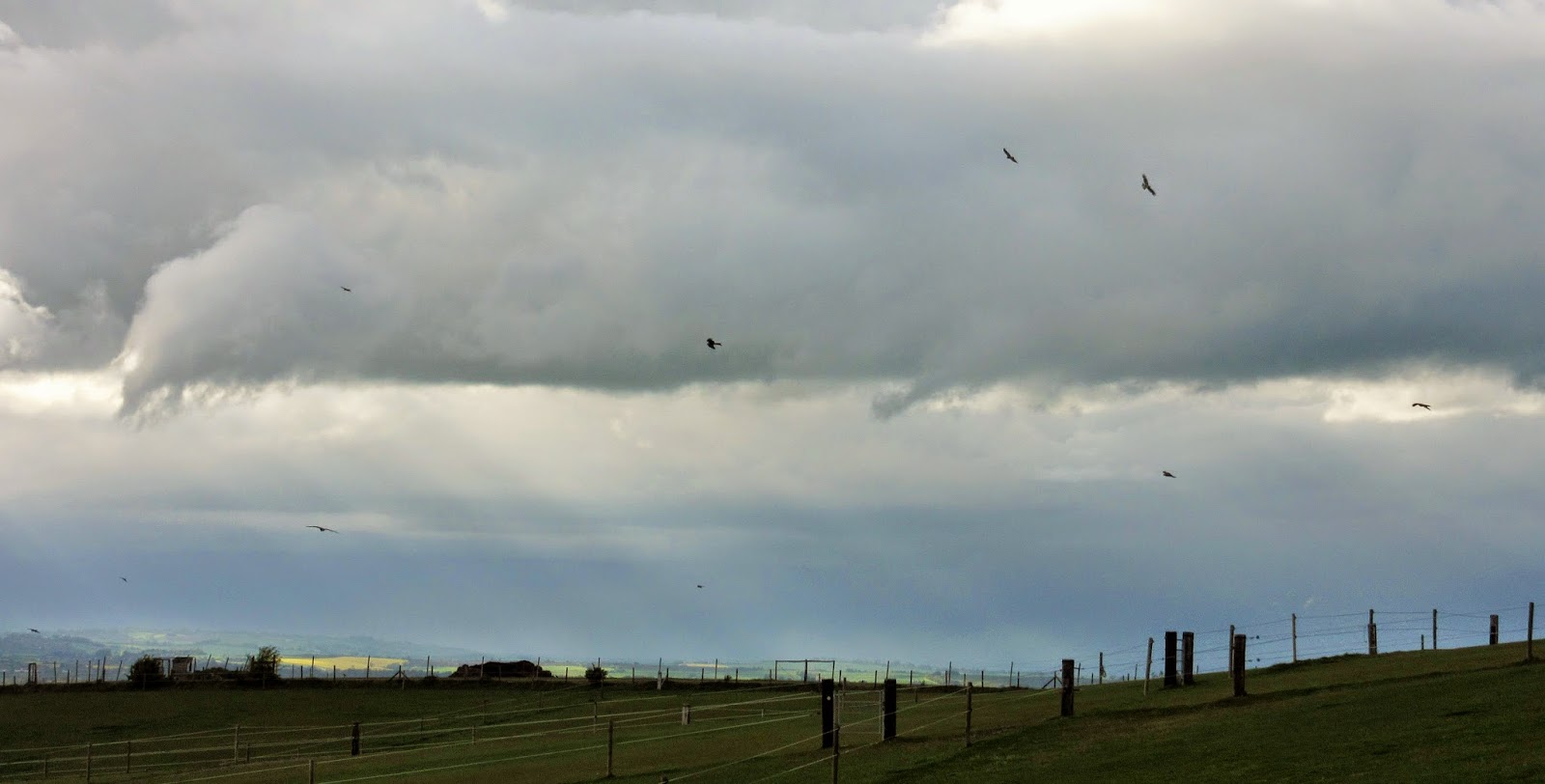
The skies n the distance were still stormy and the sun rays were peeping through the clouds. We counted 22 Red Kites over the paddocks next to Grangelands, flying low over the grass and occasionally landing on the fields. I think they must have been looking for worms after the rain.


Bug Mad Girl found several Bloody-nosed Beetles, sweet little black beetles with amazing antennae that look like their made of beads.

Bloody-nosed Beetle
Mating Bloody-nosed Beetles
She also found part of a jaw bone that's had to come home to add to her collection of treasures.
Jaw bone with some very wobbly teeth
We're very lucky to have such a fantastic site just up the road!

IDCD at College Lake

Today is International Dawn Chorus Day, so Bug Mad Girl, Nanny Moth and I joined a guided walk at College Lake. Unfortunately the weather forecast wasn't looking great, with rain and wind forecast all morning. We were still keen though when we left the house at 4.30 am, albeit a bit bleary eyed, and weren't going to be put off by a bit of wet weather!

When we got there the warden said a cuckoo had already been heard in the car park that morning. We heard robins, wrens, great tits, chaffinches, woodpigeons, a song thrush and blackbirds as we walked out of the visitor centre. Then we reached the edge of the lake and somebody pointed out a Ross's Goose. They're supposed to be in California at the moment and definitely not in this country, so nobody is quite sure whether it's been blown off course during its migration, or has escaped from a local collection. Anyway, not what you expect to see in the middle of a lake in Tring!


Ross's Goose

Ross's Goose
Also on the lake we saw lots of honking Canada Geese, 4 Egyptian Geese flew past and a pair of Shelduck sat on the edge of the lake. A pair of Great Crested Grebes were performing their courting display in front of us, although not while I was taking a photo! We also saw Common Terns, a Cormorant and Tufted Ducks.

Great Crested Grebes
We heard lots of warblers and tried spot the difference between garden warblers, willow warblers and blackcaps. A willow warbler conveniently sat in a tree in front of us and sang to us, which helped!


Willow warbler
Our guide then pointed out a Lesser Whitethroat to us - sounds a bit like a car starting.


We later also heard a Whitethroat. Further round the lake we spotted a Green Woodpecker that flew up the path and landed on a fence post, where it yaffled for us.
Green Woodpecker
We heard Long-tailed Tits in a tree above us, then walked down to the lake and heard Reed Warblers.


Then we headed up to the barn to watch the birds on the feeders, have a look at the nest cameras and warm up with a cup of tea.

Cameras on the feeders and nest boxes

Wren
A lovely way to hear the dawn chorus, even if it was a bit soggy!

Saturday, 2 May 2015

Back garden update

I caught the naughty sparrows red handed (or should that be green beaked!) I've suspected for a few days that they were eating my lettuces and now I have the proof. Last year they ate all my radishes and earlier in the spring they picked all the petals off the primroses on the front door step.

I'll forgive them though because they make us laugh!

Caught green beaked

Always good to get your 5 a day!

"What ya gonna do about it?"
The woodpigeons have to be the silliest birds in the garden. I just don't think, however hard he tries, he'll fit in that tiny hole!


The bees have been loving the apple blossom, getting absolutely covered in pollen. Hopefully we can look forward to a great crop of apples later in the year!


Friday, 1 May 2015

Dancersend Blues

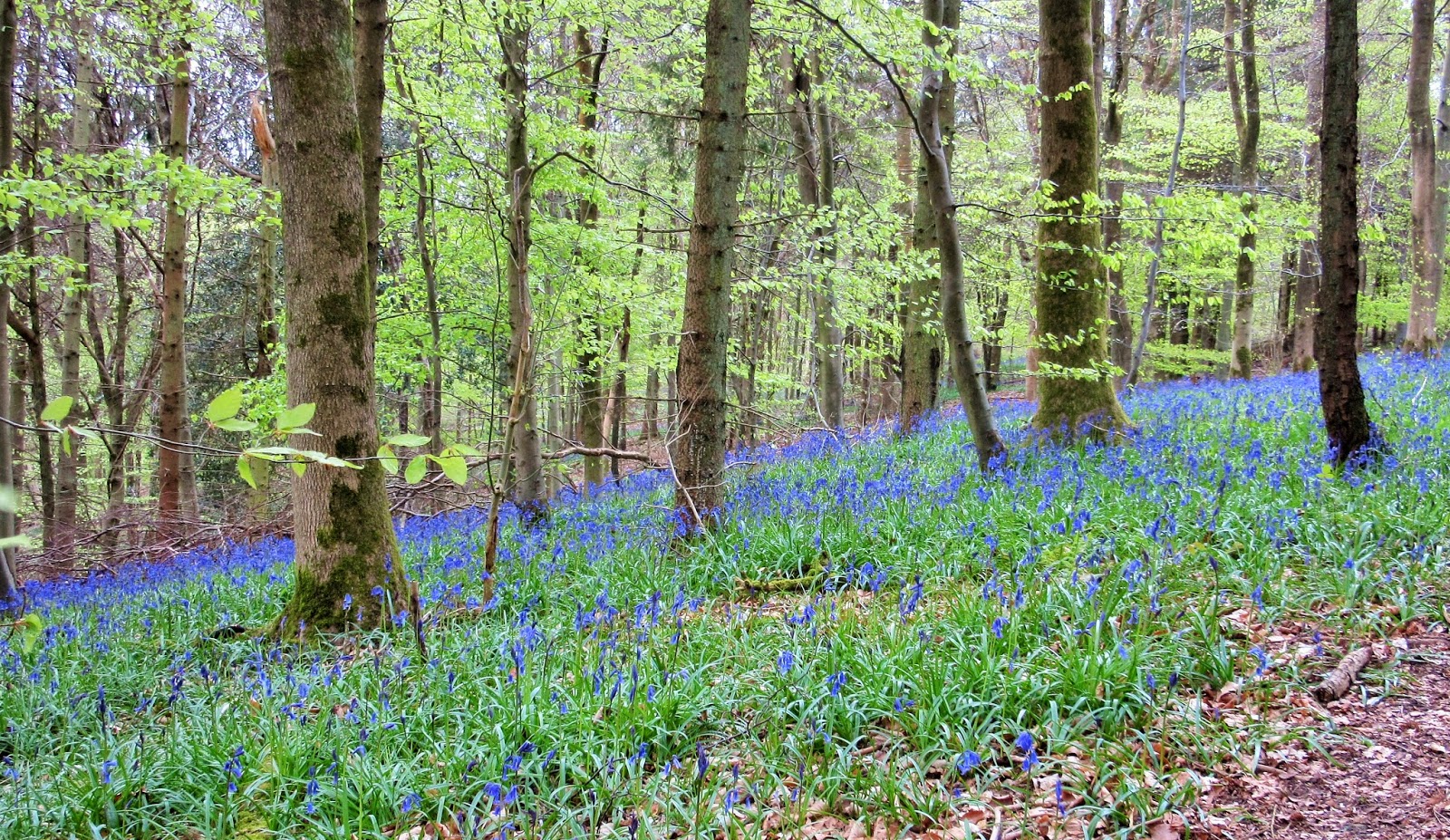
I went to Dancersend Nature reserve for a look around this morning. It's a large site made up of woodland, meadows and chalk grassland, so there's a lot to see, but the stars of the show today had to be the bluebells. They're at their peak at the moment and were absolutely stunning.


On the chalk grassland, there were plenty of signs that the orchids are on the way. I found lots of small spotty leaves and the larger leaves of the Greater Butterfly Orchid that's about to flower.  Fly orchids flower there, so I'll have to go back with Bug Mad Girl in a week or two to see if we can find them.

Spotty orchid leaves
Greater Butterfly Orchid (thanks to Mick the warden for help with the id)
There were plenty of other flowers to admire ...
Cowslips were out in the meadow
Greater stitchwort

Blackthorn

Hedge garlic - foodplant of the Orange Tip caterpillar

Spurge growing in the woods

Wood anemone

Yellow archangel (yellow dead-nettle)
There were some lovely fern leaves unfolding in the woods. They look like tightly closed fists opening up.


It was a bit chilly and breezy for the butterflies, but I did see a male orange tip and a tortoiseshell as I was leaving. It's a lovely reserve and I'm looking forward to going back to see the orchids.